
Some of the most expensive parts of a project never appear on the drawing.
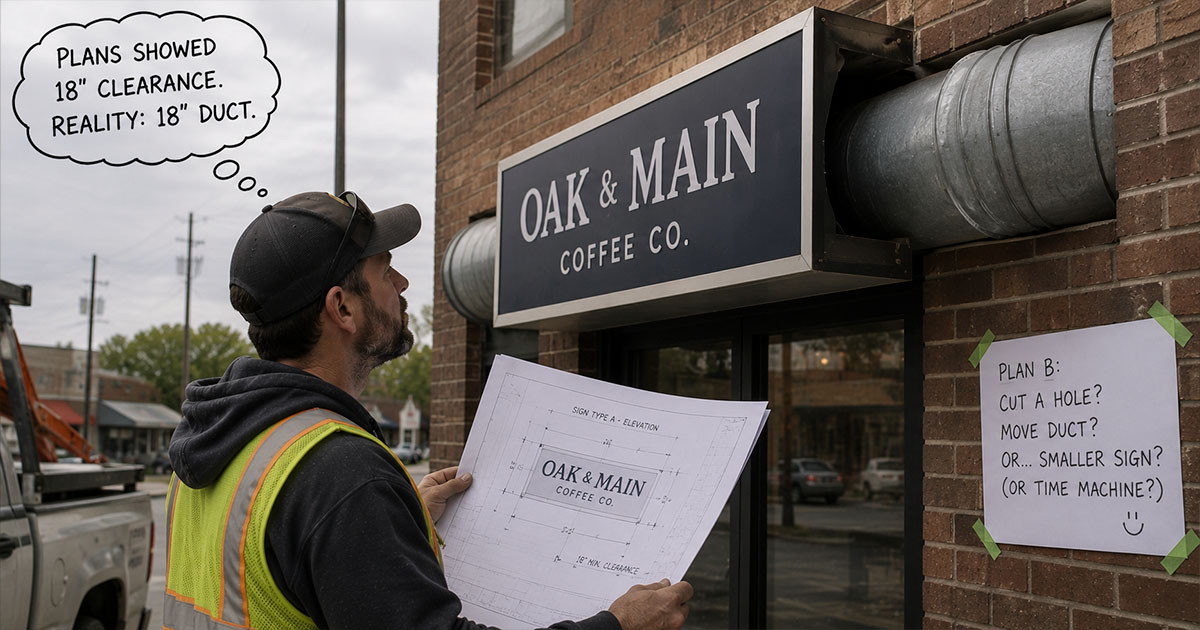
The rendering might show exactly what the finished sign should look like, but it won’t tell you about permit delays, difficult site conditions, customer revisions, access problems, freight issues, or the dozen other things that can affect the outcome of a project.
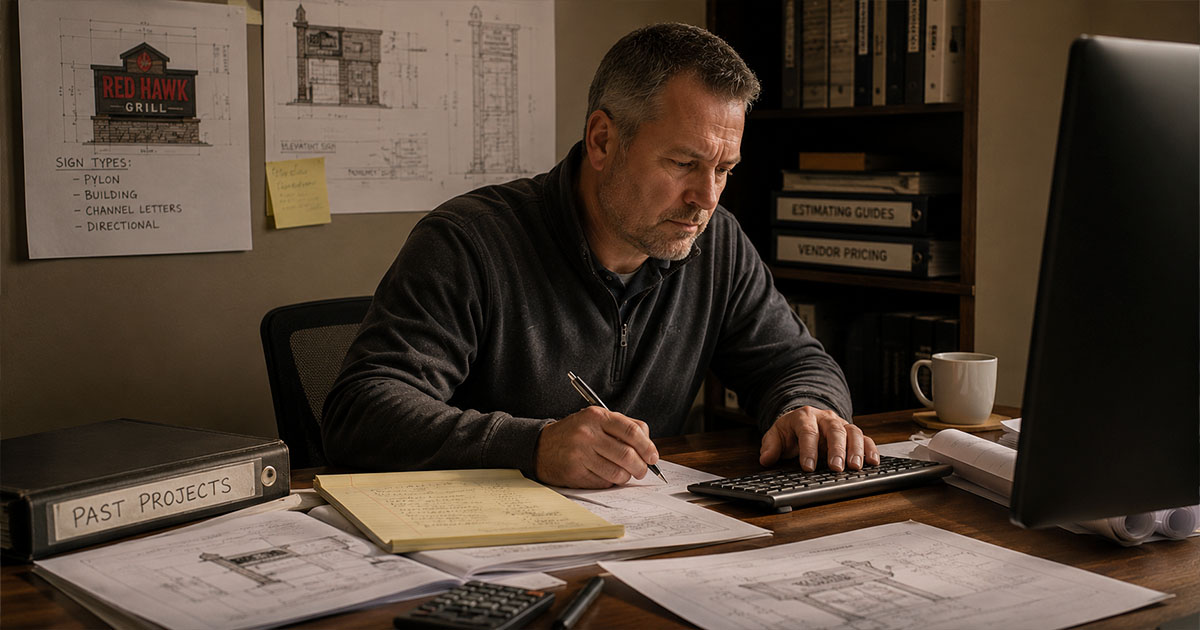
The longer I’ve owned and operated a sign company, the more I’ve realized that estimating isn’t really about pricing the sign.
It’s about pricing everything that comes with the sign.
⸻
One of the reasons I underestimated estimating when I first got into the sign business is because I thought the drawing contained most of the information you needed.
It seems obvious now, but at the time I assumed that if I had a rendering and dimensions, I was most of the way there.
The sign industry has done a pretty good job teaching me otherwise. A drawing is important, but it’s only part of the story. In some cases it’s not even the most important part of the story.
I’ve seen projects where fabrication went exactly as planned but installation turned into the challenge. I’ve seen projects where the permit process took longer than production. I’ve seen projects where the customer changed direction multiple times after approving the design. I’ve seen projects where getting equipment to the site was harder than building the sign itself.
None of those things showed up on the original drawing.
What I’ve come to appreciate about experienced estimators is that they’re usually evaluating far more than what’s on the page in front of them.
They’re thinking about the project. Not just the sign.
A newer estimator might look at a monument sign and focus on materials, dimensions, and labor. An experienced estimator is often thinking about excavation, soil conditions, utility locates, access to the site, engineering requirements, permitting, equipment, weather, and a dozen other variables that may or may not become relevant.
That’s not because they’re pessimistic. It’s because they’ve been surprised before. Enough surprises eventually become part of the estimating process.
One thing I’ve noticed while talking to other shop owners is that many of the most painful project lessons come from assumptions that seemed reasonable at the time.
Everyone assumes the permit will be straightforward.
Everyone assumes the site conditions are typical.
Everyone assumes the customer is finished making changes.
Sometimes those assumptions are correct.
Sometimes they’re expensive.
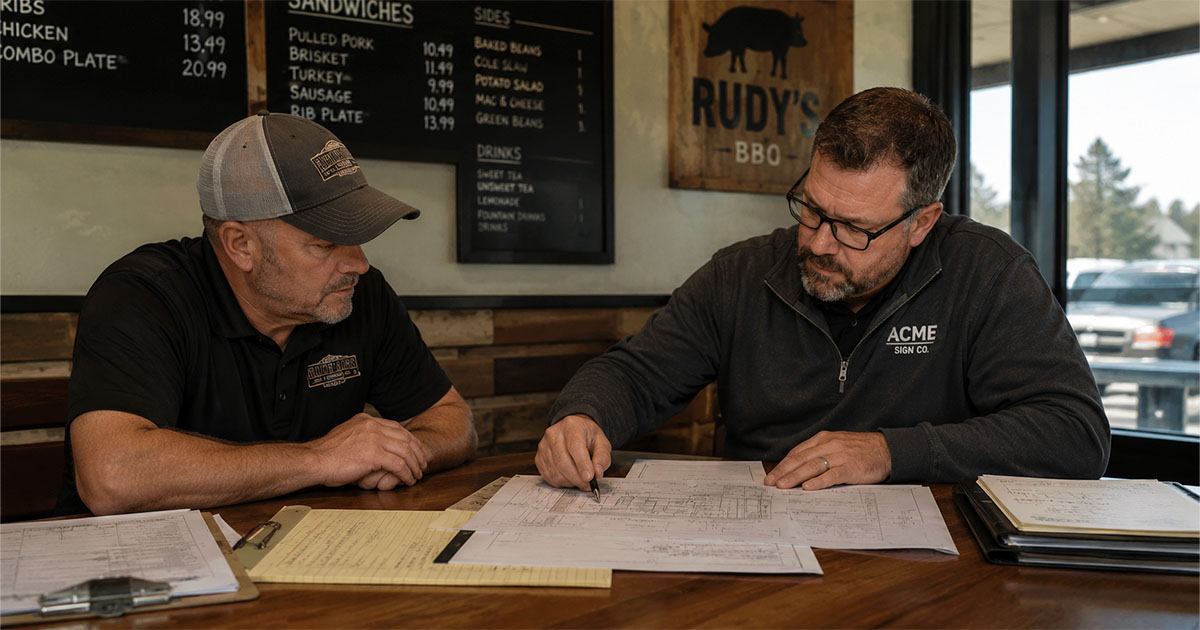
I think that’s one reason experienced estimators are so valuable. They don’t just know how to build an estimate. They know which questions are worth asking before the estimate gets built.
Building Ryvet has made me think about this quite a bit. When we started, I thought a lot about identifying materials, labor, and construction methods. The more customer conversations we’ve had, the more I’ve realized that estimating is often an exercise in identifying uncertainty.
The estimate itself is relatively easy. The assumptions behind the estimate are where things get interesting.
Several beta users have commented that Ryvet included items they might have forgotten or considerations they hadn’t initially thought about. I don’t think that happens because the software is smarter than experienced estimators. I think it happens because sometimes we all get busy. We move quickly. We focus on the obvious things and occasionally overlook the less obvious ones.
That’s part of being human.
The reality is that every estimate contains assumptions. The goal isn’t eliminating them. The goal is making sure we’re aware of them.
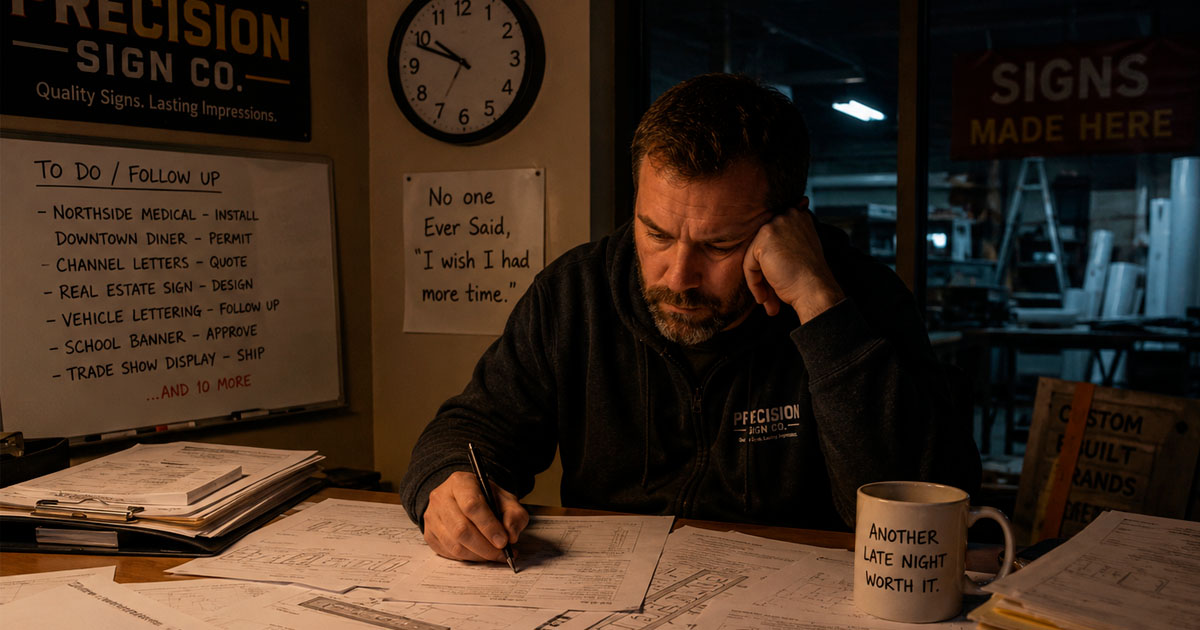
The more projects I’ve been involved with, the more I believe that successful estimating has less to do with calculating costs and more to do with identifying what could affect those costs later.
That’s where profit disappears.
That’s where schedules get stretched.
That’s where projects become frustrating.
And most of the time, those things were never on the drawing in the first place.
The drawing tells you what the customer wants.
Experience helps you understand everything else.
 4 min read
Try Ryvet
Reading about it is fine.
Estimating with it is better.
Spin up a free trial and run one of your real projects through Ryvet. You'll see what we're writing about in five minutes.