One thing that has surprised me while building Ryvet is how rarely customers want to talk about AI. What they actually want to talk about is time. Time to get estimates out faster. Time to follow up with customers. Time to train employees. Time to work on the business instead of constantly reacting to it.
The AI is just a means to an end.
⸻
When we first started building Ryvet, I assumed most customer conversations would revolve around artificial intelligence. That seemed reasonable. It’s an AI product. People are talking about AI everywhere. Every software company on the planet suddenly has AI in their marketing.
What surprised me is how little customers actually care about it.
Don’t get me wrong, they’ll ask questions. They want to know how accurate it is. They want to know what kinds of projects it can estimate. They want to understand where the information is coming from. Those are all reasonable questions.
But after a few minutes, the conversation almost always shifts somewhere else.
It shifts to time.
The estimator who’s buried and can’t keep up with incoming work.
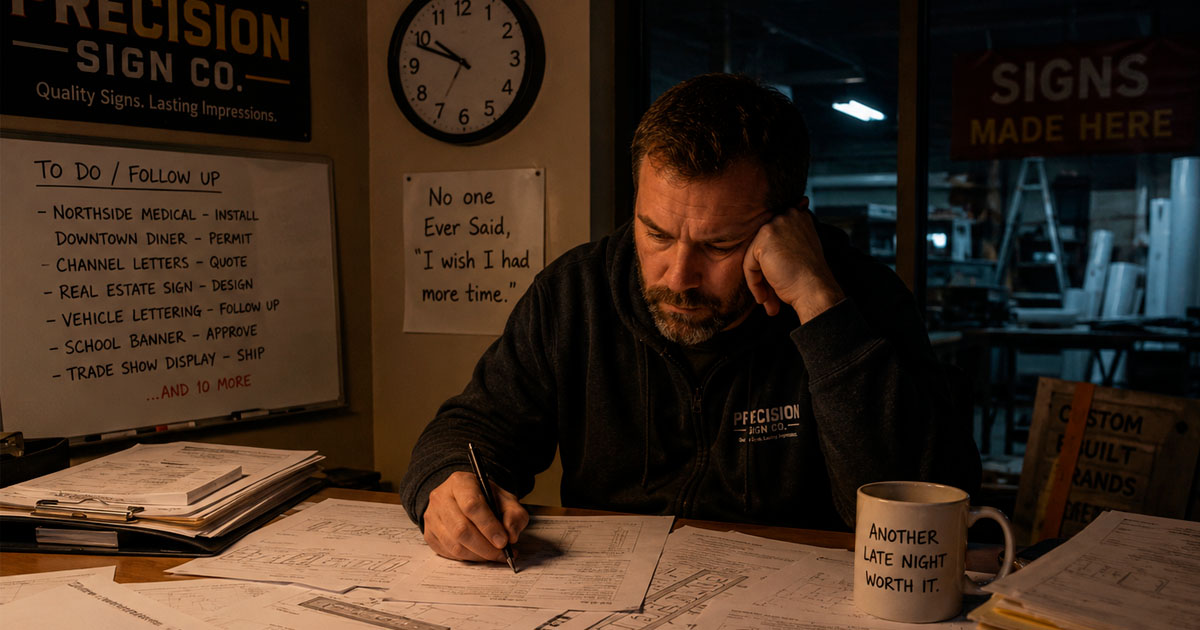
The owner who’s spending nights and weekends building quotes.
The salesperson who’s waiting on pricing before they can get back to a customer.
The project manager who’s wearing three different hats because they can’t find enough people.
The details change, but the underlying problem is usually the same. There is more work to do than there is time available to do it.
Owning and operating a sign company has made me much more aware of this than I used to be. Before that, I spent most of my career helping businesses solve technology problems. What I’ve learned since getting into the sign industry is that many of the challenges people describe as technology problems are actually capacity problems.
The estimate itself isn’t necessarily the issue. The issue is that the estimate is competing with everything else.
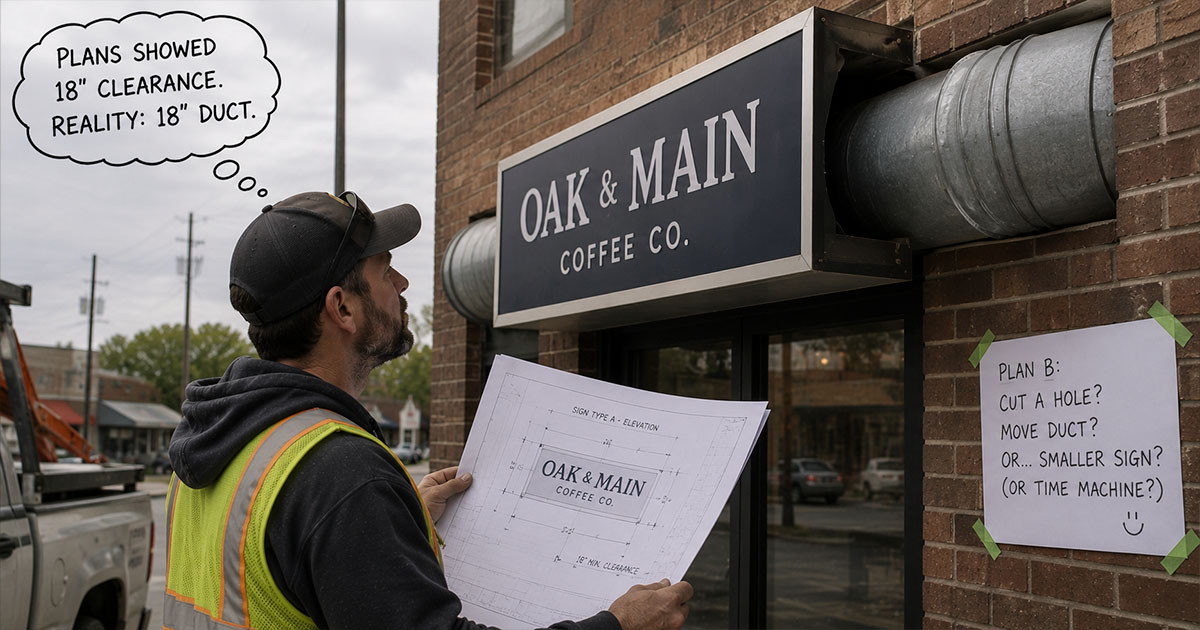
It’s competing with customer calls, production questions, vendor issues, permit problems, site surveys, project meetings, employee questions, and whatever unexpected problem showed up that morning.
Most people aren’t sitting around wishing they had access to artificial intelligence. They’re wishing they could get through their to-do list.
One of the reasons a beta comment stuck with me so much was because it was so simple. A customer told me Ryvet took away the procrastination from quoting a job.
That’s not something a software company would put on a billboard, but I understood exactly what he meant.
The estimate wasn’t necessarily difficult. The challenge was finding the time and mental energy to get started. By the end of the day, you’ve already made dozens of decisions and solved a dozen unrelated problems. Sometimes the last thing you want to do is stare at a new project and figure out where to begin.
The more customer conversations I’ve had, the more I’ve realized that nobody is really buying software because they love software.
They’re buying what they think the software might give them back.
More time.
Less stress.
Fewer bottlenecks.
Faster response times.
A little more breathing room during the week.
That’s true whether you’re talking about estimating software, accounting software, project management software, or almost anything else.
The technology itself is rarely the goal.
It’s the outcome people care about.
Building Ryvet has actually changed how I think about software in general. When we started, I was focused on what the product could do. Now I’m much more interested in what it helps people stop doing.
If it helps somebody spend less time building estimates from scratch, that’s valuable.
If it helps a shop owner avoid spending another Saturday catching up on quotes, that’s valuable.
If it helps an experienced estimator focus on reviewing and improving estimates instead of building every single one from the ground up, that’s valuable.
None of those things are really AI stories.
They’re time stories.
And the more I talk to customers, the more convinced I become that time is what people are actually trying to buy.
 4 min read


Try Ryvet
Reading about it is fine.
Estimating with it is better.
Spin up a free trial and run one of your real projects through Ryvet. You'll see what we're writing about in five minutes.